The Five Elements (Wu Xing) is an important concept in ancient Chinese philosophy,referring to the five fundamental elements:Wood, Fire, Earth, Metal, and Water. The theory of the Five Elements holds a crucial place in Chinese traditional culture, and is widely applied in fields such as TraditionalChinese Medicine, the I Ching, Feng Shui, astronomy, and music. The Five Elements are interconnected through mutual generation (sheng) and mutual overcoming (ke), reflectingDAILNthe dynamic relationships in nature and humansociety, and revealing the operational laws ofthe universe.
The meaning and interrelationships of the Five Elements
1.Wood: Represents growth, prosperity,.and creativity. It is associated with spring,symbolizing growth and upward expansion. Inthe Five Elements, Wood corresponds to theliver, the color green, and the east wind.
2. Fire:Represents passion, light, andchange. Fire is associated with summer,symbolizing heat and rising. It is linked to theheart, the color red, and the southern wind.
3. Earth: Represents stability, nourishment,and support. Earth symbolizes the transitionbetween seasons, connecting Wood,Fire,人Metal, and Water. In the Five Elements, Earthcorresponds to the spleen, the color yellow,and the center.
4. Metal: Represents hardness, contraction,and strength. Metal is associated with autumn,symbolizing harvest and the firmness ofmetals. It is connected to the lungs, the colorwhite, and the western wind.
5. Water: Represents fluidity, calmness, andnourishment. Water symbolizes winter,representing flow and coldness. It correspondsto the kidneys, the color black, and thenorthern wind.
The relationships between the Five Elements are complex and haveregular patterns, primarily focusing on the conceptsomutualgeneration”(sheng)and”mutual overcoming”(ke):
- MutualGeneration(Sheng):Woodgenerates Fire, Fire generates Earth, Earthgenerates Metal, Metal generates Water, Watergenerates Wood. This means each elementnurtures or creates the next element.
- Mutual Overcoming (Ke): Wood overcomesEarth, Earthovercomes Water,Waterovercomes Fire, Fire overcomes Metal, Metalovercomes Wood. This means each element can restrict or control another.
The Five Elements Theory has been applied in multiple fields
- Traditional Chinese Medicine:The FiveElements correspond to the Five Organs(Liver, Heart, Spleen, Lungs, and Kidneys),helping diagnose and treat diseases. Forexample, Wood corresponds to the liver, Fireto the heart, Earth to the spleen, Metal to thelungs, and Water to the kidneys.
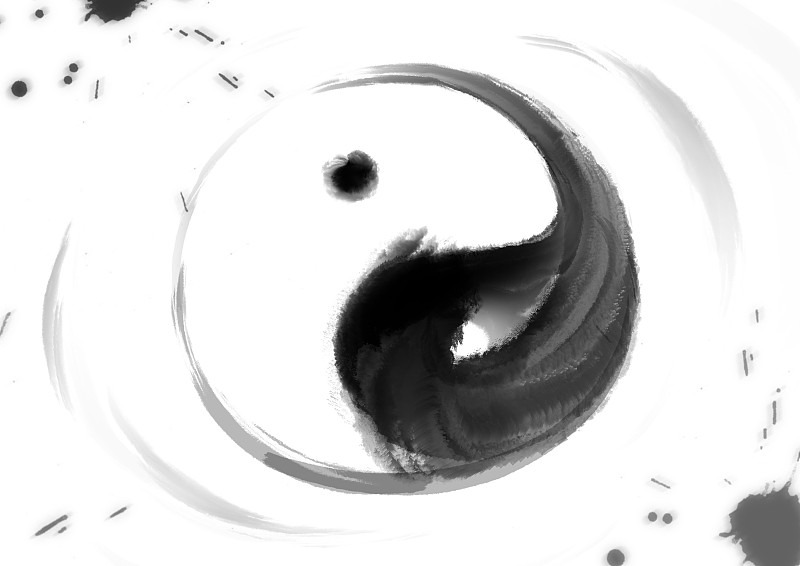
- I Ching: The Five Elements are combinedwith the Yin-Yang theory to interpret thehexagrams in the I Ching, aiding in predictingfuture changes.
- Feng Shui: The relationships of generationand overcoming between the Five Elementsinfluence the arrangement of the environment,affecting people ‘ s living conditions andfortunes.
- Daily Life: The Five Elements are also usedin numerology, astrology, and naming, wheres Five Elementsone analyzes a personattributes to predict their personality, destiny,and other aspects

The Five Elements are not only a classificationof natural elements but also reflect ancientChinese philosophical insights into the worldand its changes. The interrelationship betweenthe Five Elements embodies the idea of”dynamic balance,”revealing the universallaws of mutual dependence and restrictionamong all things. Through the Five Elements,ancientpeople sought to understand theintrinsic connections between nature, society,and human behavior, aiming for harmonybetween humans and the natural world.
